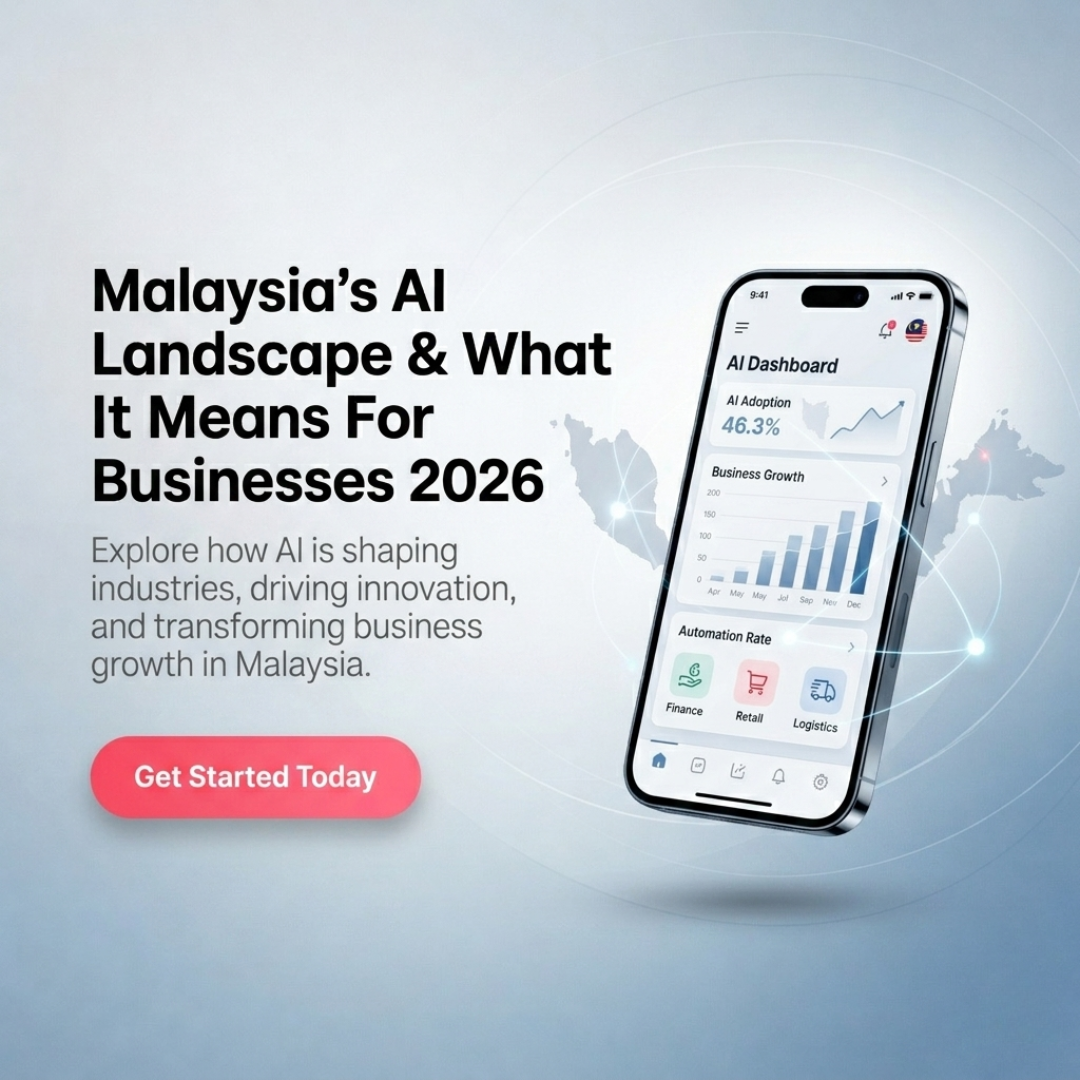
Malaysia’s AI Landscape & What It Means For Businesses 2026
Malaysia’s AI market has reached a critical tipping point. By 2030, the country is poised to account for $115 billion of Southeast Asia’s AI-driven GDP, opening up significant prospects for expansion and innovation.
But we also begin to ask:
“How will AI affect my business?”
“Will AI replace me at work?”
This article investigates Malaysia’s AI landscape, including which brands are investing, how it affects key sectors, and the development hurdles it faces.
The Rise of AI in Malaysia
Malaysia’s AI ecosystem has accelerated, with 140 AI solution providers earning more than RM1 billion in sales as of July 2024.
Malaysia’s AI ecosystem spans industries of all sorts, with a focus on digital health, digital cities, and agriculture. Approximately half of Malaysian customers (47%) prefer to interact with brands using AI. Companies are also moving more quickly, with 33% of them aiming to improve customer experience through AI adoption.
Key participants in Malaysia’s AI ecosystem
Global IT behemoths are actively investing in Malaysia’s AI potential, understanding its strategic significance in the region. These investments not only strengthen the country’s digital infrastructure but also promote a robust AI environment.

Google will invest $2 billion in Malaysia to boost the country’s digital transformation. This includes establishing its first data center and Google Cloud region in Greater Kuala Lumpur.
Google Cloud provides a comprehensive AI platform, and the alliance seeks to increase Malaysia’s GDP by more than US$3.2 billion and create 26,500 jobs by 2030, according to an independent analysis. This collaboration complements Malaysia’s digital economy objectives and the MADANI Economy Framework.
IBM

IBM has been a prominent advocate for AI in Malaysia. Speaking on prominent podcasts such as BFM and news organizations that highlight their data, 75% of CEOs believe that deploying AI will provide them a competitive advantage. Dickson Woo, Managing Director of IBM Malaysia, predicts that by 2025, local organizations will be looking to adopt cost-effective medium to small language models. IBM has also committed to teaching two million AI learners by the end of 2026, collaborating with Universiti Malaysia Terengganu and training partners to develop AI coursework, IBM SkillsBuild.IBM unveiled Watsonx, an AI platform that empowers business owners with generative AI for essential business activities to boost productivity.
Microsoft

Microsoft said in 2024 that it would invest US$2.2 billion to support Malaysia’s digital transformation, the largest single investment in the company’s 32-year history in Malaysia.
Microsoft’s stake includes:
Our goals include establishing cloud and AI infrastructure in Malaysia, training an additional 200,000 people, collaborating with the government to establish a national AI Center of Excellence, improving cybersecurity, and fostering growth in Malaysia’s developer community.
In addition to significant investments from global technology companies, the Malaysian government is playing an important role in pushing AI use and innovation.
Malaysian Government AI Initiatives
National AI Office (NAIO)
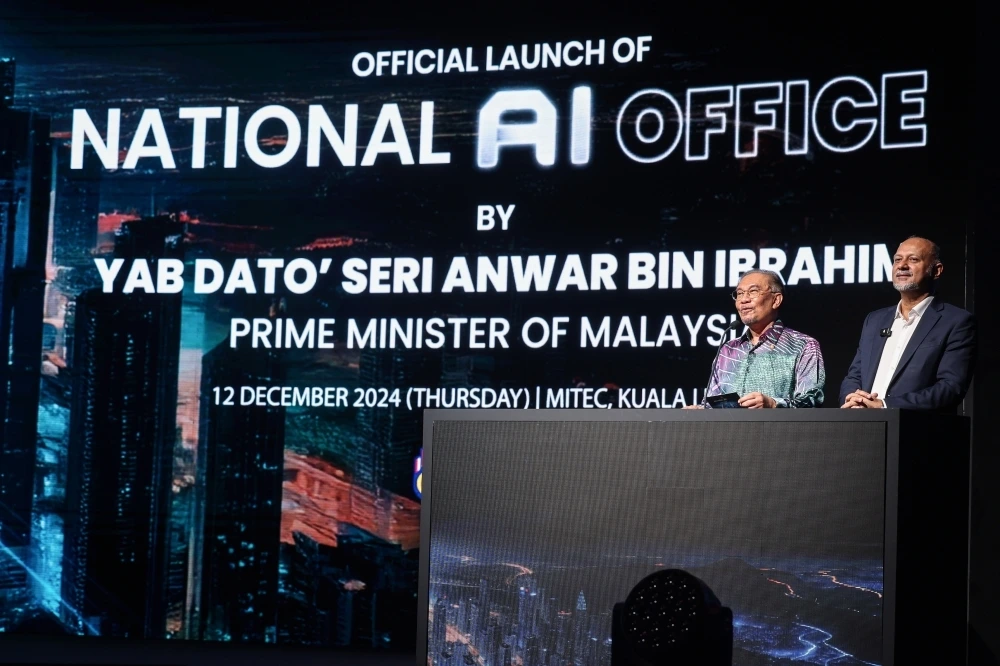
The National AI Office (NAIO), which has been approved by the Cabinet for establishment on August 28, 2024, would act as Malaysia’s central authority for championing its AI agenda. The goal is to establish Malaysia as a regional leader in AI technology and applications, as well as to encourage widespread AI use.
Key Deliverables
Malaysia’s National AI Office (NAIO) aims to improve the country’s AI capabilities. Here are the primary things it wants to achieve:
- Create the AI Technology Action Plan for 2026-2030.
- Establish an “AI Adoption Regulatory Framework”
- Publish a “AI Code of Ethics”
- Conduct an “AI Impact Study for Government”.
- Publish the “National AI Trend Report”
- Create datasets relevant to AI technology.
- Launch activities to speed up AI technology adaptation.
These activities aim to position Malaysia as a leader in AI technology while guaranteeing ethical usage to benefit people and businesses.
Budget 2025 AI Adoption
Budget 2025 prioritizes the development of Malaysia’s high-tech sectors, such as artificial intelligence (AI), robotics, and the Internet of Things (IoT). Benefits for businesses include:
- Tax incentives include deductions for training and development in developing technologies.
- Tax advantages for establishing high-paying positions in artificial intelligence and data science.
- R&D Support: Double tax deductions for AI research.
- An RM1 billion fund for talent development in smart manufacturing, health technology, and green solutions.
- Improved recruiting process for international AI graduates from Malaysian universities.
- Education partnerships include collaboration with universities and TVET institutes to provide specific AI training programs.
The government’s aim for AI adoption is further demonstrated by the Oxford Insights Government AI Readiness Index 2024, which puts Malaysia 29th out of 188 countries.
Applications of AI in Malaysia
AI is transforming the way we live and work in Malaysia. According to a speech at the Malaysia Digital Tech Adoption Summit, by 2030, AI is predicted to produce around US$115 billion in productive capacity for Malaysia.
This contribution to our national GDP highlights AI’s potential in five sectors: manufacturing, healthcare, finance, and public services.
Healthcare
Studies have looked into how AI may increase laboratory productivity, its usage in genomic medicine, AI mental health assistance, and other topics. One study found that AI was 91% better at detecting early breast cancer than radiologists (74%).
Gleneagles Kuala Lumpur in Malaysia was an early adopter of technology, utilizing Robotic Process technology (RPA) to address significant difficulties in hospital bill payments and optimize finance processes.
However, while Gleneagles’ doctors discuss the benefits of using AI in healthcare-related procedures, they do not indicate whether these technologies are employed in their practice.
Dr. Mohamad Fadli Kharie, senior principal assistant director of the Ministry of Health, states that “AI in Malaysian healthcare is in its early stages.“
This sentiment is shared by many, yet the worldwide AI in healthcare market is growing rapidly and is expected to continue in the future years. Between 2022 and 2023 alone, the market increased by 45%, from $15.4 billion to $22.4 billion.
Public Services

The Institute for Management Development’s Smart City Index currently ranks Kuala Lumpur as the 73rd smartest city in the world, up 16 points.
In Putrajaya, we have seen the deployment of 5G-enabled autonomous buses equipped with high-definition cameras and real-time Vehicle-to-Everything (V2X) technology for passenger safety, in line with the Smart City Framework, which many credit with the advancement of AI adoption throughout public sectors.
According to a Deloitte study, smart technology has the potential to reduce crime by 30-40% and emergency response times by 20-35%.
In Malaysia, the Next Generation Emergency Services 999 (NG999), which is planned to replace the current emergency service system by 2026, claims to combine data analytics and artificial intelligence to provide more effective emergency responses.
However, despite worries about violations of fundamental principles, the perpetuation of racial bias, and discriminatory behaviors, we have yet to hear of any AI deployment in crime prevention in Malaysia.
AI Fact-check Assistant (AIFA)
Malaysia has launched AIFA (Artificial Intelligence Fact-Checking Assistant), an AI-powered chatbot aimed at combating disinformation on WhatsApp and sebenarnya.my (the fact-checking website started in 2017). The Communications Ministry launched AIFA, which assists users in verifying viral messages, news stories, and hot topics with real-time data and AI-driven fact-checking.
The AIFA AI chatbot shows signs of maturation, demonstrating rudimentary functionality by referring users to resources and indicating limitations when confronted with unclear queries.
While it effectively provides fact-checking assistance and recognizes when more context is required, its natural language processing (NLP) capabilities are limited, particularly with open-ended or broad questions. AIFA mostly relies on user input rather than proactively accumulating or processing data to provide dynamic replies.
AIFA would benefit from improved natural language processing algorithms for contextual comprehension, real-time data integration for proactive insights, and a mechanism for learning from user interactions to improve performance and user experience.
Languages Supported:
Languages include Malay, English, Mandarin, and Tamil.
Try it out at Sebenarnya. You can reach me on WhatsApp at +603 8688 7997.
Manufacturing
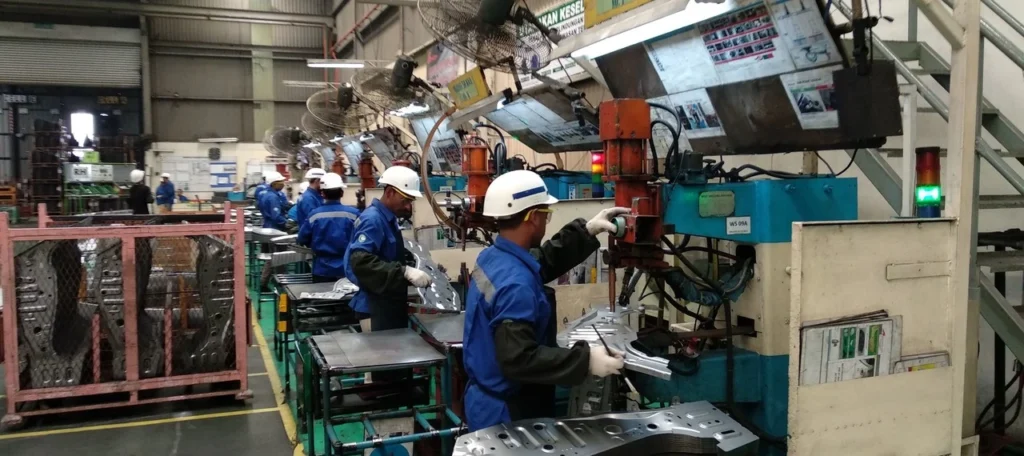
Malaysia’s industrial sector has embraced AI-powered automation and smart factory technology, in line with the worldwide Industry 4.0 movement. While the country is now positioned between Industry 2.0 and 3.0, major efforts are being made to develop to Industry 4.0.
According to Deloitte research, smart factories have the potential to boost production capacity by up to 20% while reducing expenses by 15%.
Clarion Malaysia announced the successful trial of Malaysia’s first 5G-enabled manufacturing line. According to Digital News Asia, Clarion has reduced its production processing time by 70% thanks to Yes 5G and artificial intelligence.
According to Business Times, Smart Modular uses AI-powered high-speed precision industrial robots to discover and isolate manufacturing problems using the IBM Maximo Visual Inspection system.
KVC Industrial Supplies Sdn Bhd has automated its finance department’s procure-to-pay process using IBM’s robotic process automation.
Finance
Maybank launched a Shariah-compliant and hyper-customised Discretionary Portfolio Mandate (DPM) in 2023, employing AI to facilitate completely active asset management by computing predicted returns for at least 25,000 listed shares using financial and non-financial facts.
In 2024, Maybank formed a partnership with Bank of Hangzhou to promote cross-border business and AI digital innovation. Maybank’s MAE app also employs AI to assist with financial insights, planning, and tracking.
Excelerate also states that CIMB Malaysia, Bank Muamalat, Mashreq Al Islami Bank, and AmBank are implementing AI in HR and administrative procedures, customer service, and data analytics.
According to their findings, three out of five polled bank representatives identified at least one Generative AI project in use at their institution, with four out of five reporting Generative AI projects in development.
The data above demonstrate Malaysia’s banking industry’s growing use of AI.
Agriculture
Artificial intelligence is altering the game in Malaysia’s agricultural economy.
Paddy Fields

The Smart Sawah Berskala Besar (Smart SBB) system, which was deployed in 2021, employs drones and artificial intelligence to help paddy fields become more productive.
In Sekinchan, Selangor, an area of over 100 hectares raised its average yield by about four times over the course of a year and a half, from 2.5 tonnes per hectare to more than eight metric tons per hectare. In 2024, this area reported fruitful harvests of 10 to 12 tonnes per hectare.
Palm oil plantations
In a study on palm oil plantation management, YOLO (You Only Look Once) deep learning models were combined with drone and satellite imaging technology to locate oil palm trees.
By assessing the F1-Score—a measure of precision and recall—YOLOv8 scored between 97.36% and 99.31%, with detection times ranging from 28 to 51 seconds, indicating that this technology is suitable for monitoring sparsely populated areas that may be difficult for people to reach.
Malaysia’s AI strategy for 2021-25 involves the development of autonomous robots as part of the “Autonomous Robotics in Oil Palm Harvesting Management System”, with the goal of increasing the country’s lead in vegetable oil exports.
Malaysia’s rapid AI growth poses numerous significant challenges that require long-term solutions.
Challenges for AI Development in Malaysia
Malaysia’s rapid AI growth poses numerous significant challenges that require long-term solutions.
Job Displacement
AI automation may affect 30% of Malaysian jobs by 2030. The industrial and service industries are the most vulnerable, as 50% of work time in Malaysia is spent on highly automatable tasks.
According to Minister Chang Lih Kang, more than 600,000 people would need reskilling training in the next three to five years to stay relevant in an increasingly competitive labor market.
Nonetheless, by 2030, the country is expected to require an extra 500,000 qualified individuals to meet the needs of the technology and technical industries. AI is expected to produce 133,000 new jobs across all industries, especially in technology and data analytics.
TalentCorp has conducted numerous in-depth research on AI, Digital, and Green Economy in a variety of Malaysian businesses.
Resource Limitations
According to a 2022 report from the Malaysian Productivity Corporation (MPC), 80% of Malaysian enterprises are still at levels 1 and 2 of technology adoption.
Furthermore, small enterprises face substantial implementation costs. A typical AI system costs between RM500,000 and RM2 million as an initial investment.
However, digital providers like Revenue Discovery Solutions are producing low-cost custom AI models for company optimization.
Ethical and Regulatory Concerns
Data privacy remained the biggest concern, with 60% of Malaysians concerned about AI-enabled gadgets exploiting personal information.
In June 2024, Malaysia updated the Personal Data Protection Act (PDPA), broadening its scope and requirements. This includes establishing the right to data portability and tougher punishments for data breaches.
In September 2024, the Ministry of Science, Technology, and Innovation issued rules on AI governance and ethics.
The national AIGE guidelines’ objectives.
However, Malaysia has no explicit laws or regulations addressing artificial intelligence (AI). Without coordinated AI governance frameworks, implementation standards will remain inconsistent.
Opportunities for SMEs and startups to adopt AI by 2026
AI adoption is redefining the landscape for Malaysia’s small and medium-sized organizations (SMEs), providing considerable prospects for productivity growth and digital transformation.
The government has implemented several programs to address the issues that SMEs experience while implementing AI, such as high costs and talent gaps.
| Program | Description |
| Malaysia Digital Catalyst Grant (MDCG) | Provides up to RM1 million or 50% of project expenditures to support innovation in Malaysia’s digital economy, with a focus on artificial intelligence. The fund, which focuses on building scalable, high-impact solutions, will assist initiatives within Malaysia’s Digital Promoted Sectors for up to a year. |
| AI Untuk Rakyat (AI for the People) | A self-learning online application developed by MyDIGITAL in conjunction with Intel. Cater to varied age groups and address issues onBasic understanding of artificial intelligence, its uses, and the myths and fallacies around it.Knowledge of the primary disciplines of AI (computer vision, natural language processing, and statistical data) and their impact on numerous businesses, as well as AI ethics and responsible AI concepts.Available in four languages: Bahasa, English, Tamil, and Mandarin. |
| AI Sandbox Pilot Programme | By 2026, we hope to have established up to 900 AI firms and trained at least 13,000 new AI professionals. |
| MyDataHub.Ai Platform | MDEC and Dattel Asia Group launched this platform to provide SMEs with access to RM150 million in finance. It connects enterprises with partners, enabling the exchange of data and strategies, and encouraging SMEs to implement digitalization and AI plans. |
The Future of AI in Malaysia: Embracing Innovation and Getting Ready for Change
AI is no longer just a trend; it is actively altering Malaysian businesses. Companies that embrace AI will increase efficiency, improve consumer experiences, and open up new growth prospects. From automating monotonous jobs to enabling data-driven decision-making, artificial intelligence can help firms streamline operations and remain competitive in a quickly changing market.
Rather than completely replacing occupations, AI augments human abilities, allowing professionals to focus on higher-value tasks such as strategic planning, problem solving, and creativity. However, adapting to AI necessitates that organizations invest in the appropriate technologies, upskill their workers, and apply AI safely.
Revenue Discovery provides custom software development and AI-driven solutions to help businesses integrate AI into their operations. Whether you’re looking at automation, machine learning, or data analytics, the right AI approach can help you future-proof your business.
Now is the time to embrace AI, explore new opportunities, and drive corporate success in Malaysia’s digital future. Discover how Revenue Discovery’s software development solutions may help your organization benefit from AI.
Frequently Asked Questions
How is Malaysia’s artificial intelligence ecosystem progressing in comparison to surrounding countries such as Singapore and Indonesia?
Malaysia’s AI ecosystem is rapidly expanding, thanks to government programs like MyDIGITAL and partnerships with global tech giants like NVIDIA. While Singapore is the leader in AI research and development, and Indonesia is focused on large-scale AI adoption, Malaysia is carving out a niche in AI-driven digital services, SMEs’ digital transformation, and AI talent development programs. Programs such as AI Sandbox and AI Untuk Rakyat seek to strike a balance between talent development and innovation.
Will AI Adoption in Malaysia Lead to Job Displacement?
AI adoption may redefine work responsibilities in Malaysia, but preemptive measures are in place to ensure a successful transition. Here’s how Malaysians and businesses can handle this transition and the skills required for the future:
How Malaysia Addresses the Shift
- Upskilling and reskilling
- Programs like AI Untuk Rakyat and MyDigitalWorkforce Movement assist Malaysians in developing AI, data analysis, and coding skills for future-proof professions.
- New Job Creation
- The AI Sandbox Pilot Programme intends to launch 900 AI firms and create 13,000 AI-related jobs by 2026.
Skills for the Future-Ready Talent
- AI and Data Literacy – Learn about AI applications and data-driven decision-making.
- Programming and Automation Fundamentals of Python, R, and machine learning models.
- Adaptability and Continuous Learning – Keeping up with emerging AI tools and trends.
- Problem-solving and Creativity – Required for positions demanding strategic thinking and innovation.
- Soft Skills – Strong communication, teamwork, and emotional intelligence are required to collaborate with AI systems.
How will Deepseek impact Malaysia’s AI market?
The rise of DeepSeek, a Chinese AI startup, has prompted global market movements, but Malaysia’s Digital Minister, Gobind Singh Deo, has assured stakeholders that the impact on the local AI market and data center boom is positive.
Despite large sell-offs in global chipmaker stocks such as Nvidia, which witnessed a 17% decrease in share price and a $600 billion loss in market capitalization, Gobind stated that “DeepSeek represents an opportunity rather than a threat to Malaysia’s AI ecosystem.” He continued: “Malaysia’s focus remains on innovation and leveraging AI advancements to drive economic growth.”
Companies such as YTL Power International Bhd and NationGate Holdings Bhd have suffered losses due to fears about decreased demand for high-end semiconductors.
YTL Power, an NVIDIA cloud partner, is concerned about the demand for its upcoming GB200 processors, while NationGate, which relies largely on AI server sales, is dealing with export limitations.
However, the minister emphasized that Malaysia’s developing digital economy and dedication to building a strong AI ecosystem will safeguard the country’s long-term resilience and adaptation to global changes, establishing it as a competitive participant in the AI industry.