
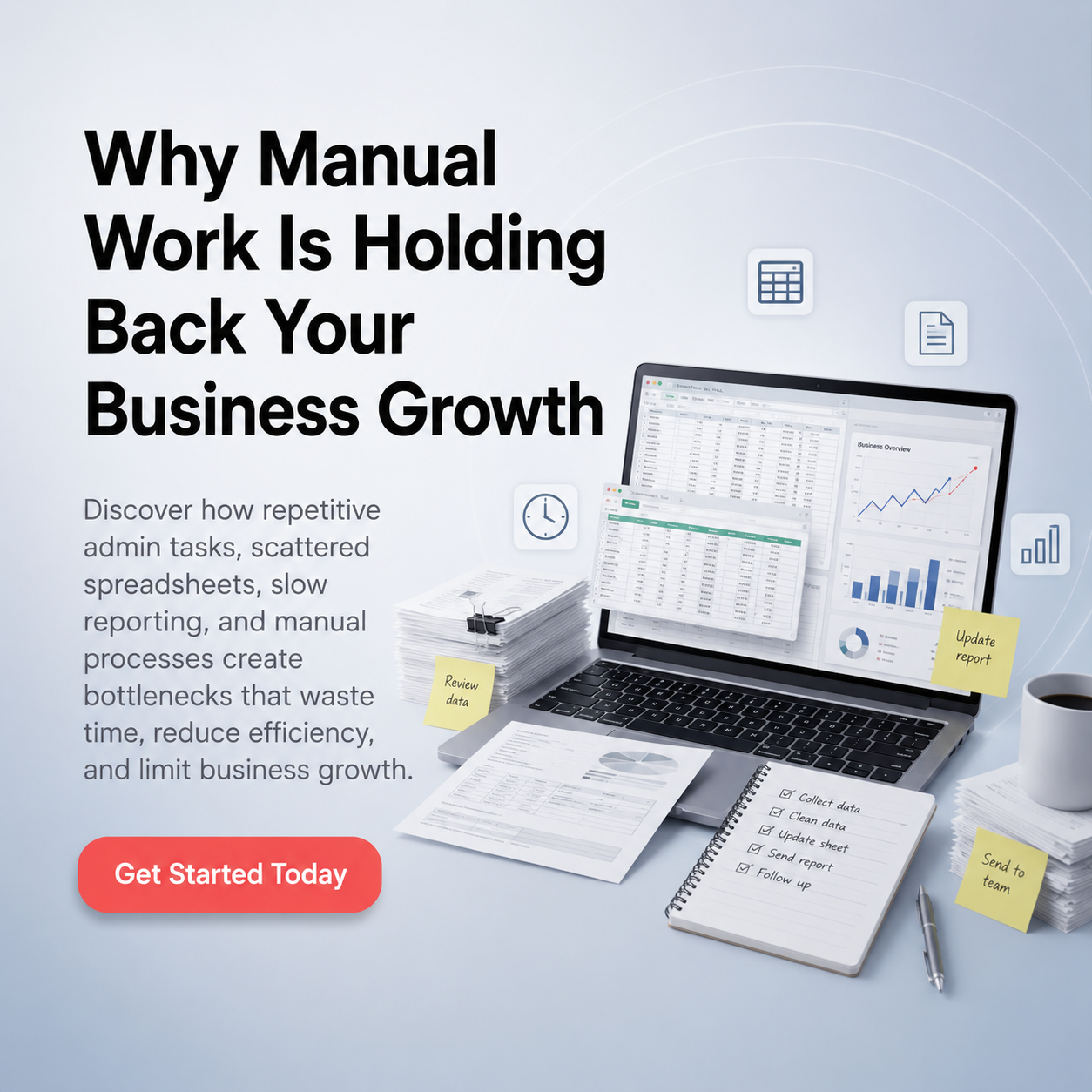
Why Manual Work Is Holding Back Your Business Growth
Many businesses start with manual processes because they are simple and easy to manage at the beginning.
Staff use Excel to track data, WhatsApp to update customers, email to send documents, and paper forms for approvals. This may work for a small team.
But when the business grows, manual work can become a serious problem. It slows down operations, increases mistakes, and makes it harder for the company to scale.

What Is Manual Work in Business?
Manual work refers to tasks that require staff to update, check, copy, send, or process information by hand.
Examples include preparing reports manually, entering customer data, checking payment status, updating inventory, following up leads, collecting forms, and sending repeated reminders.
These tasks may look small, but when repeated every day, they can take a lot of time and energy.

1. Manual Work Takes Too Much Time
Manual tasks can consume many hours every week.
For example, staff may spend time searching for data, updating spreadsheets, preparing reports, or checking information from different platforms.
This reduces time that could be used for sales, customer service, planning, and business improvement.

2. Manual Work Increases Human Error
When data is entered or copied manually, mistakes can happen easily.
A wrong customer phone number, missing payment record, outdated stock count, or incorrect report can affect business operations.
Small mistakes can lead to bigger problems, especially when many departments depend on the same information.

3. Manual Work Slows Down Customer Response
Customers today expect fast replies and accurate updates.
If staff need to check multiple files, ask another department, or search old WhatsApp messages before replying, the response becomes slow.
This can affect customer satisfaction and make your business look less professional.

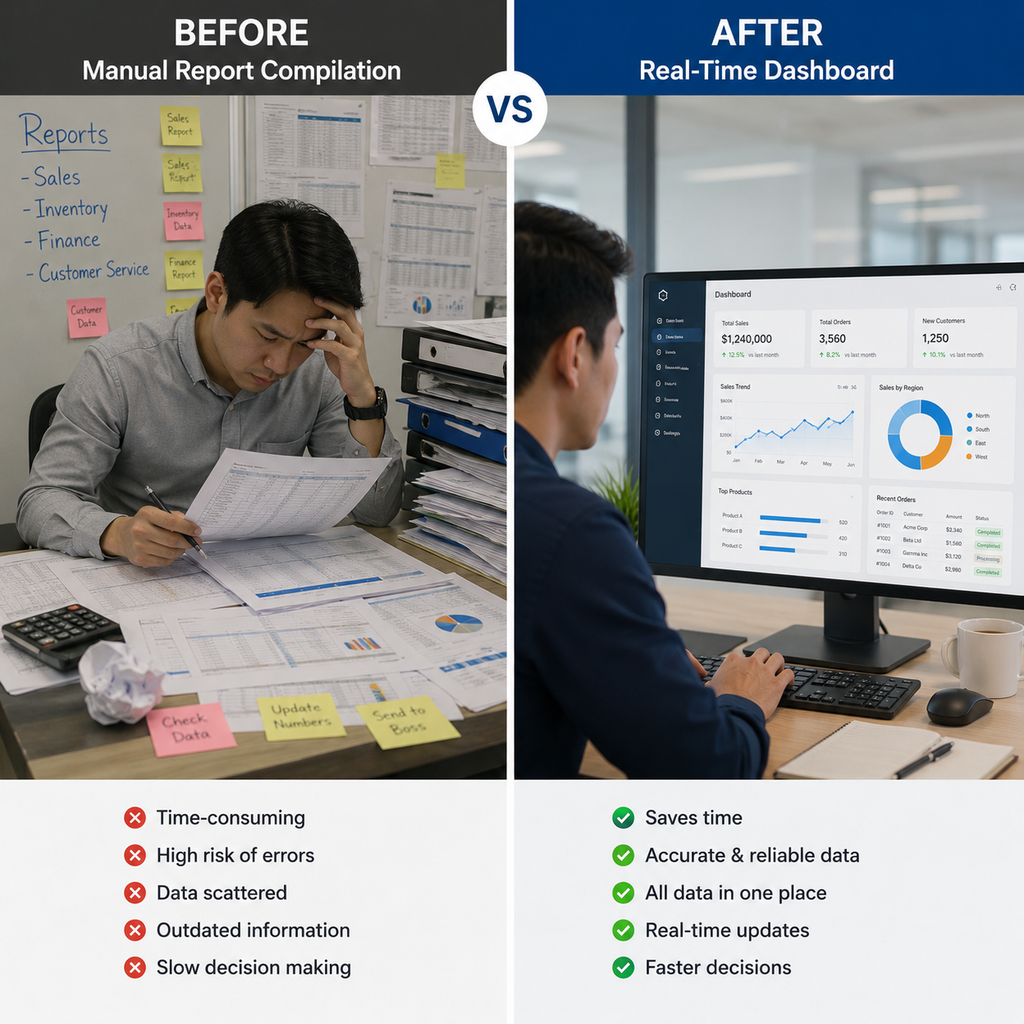
4. Manual Work Makes Reporting Difficult
Business owners need clear reports to make decisions.
But when reports are prepared manually, they often take too long to complete. Staff need to collect data, clean it, combine it, and format everything before sharing it with management.
By the time the report is ready, the data may already be outdated.
5. Manual Work Limits Business Growth
A growing business needs a process that can handle more customers, more data, more staff, and more transactions.
Manual work becomes harder to manage when the volume increases.
Without a proper system, the company may need to hire more staff just to handle repetitive tasks instead of improving efficiency through technology.

6. Manual Work Affects Team Productivity
When teams rely on manual updates, miscommunication can happen easily.
Sales may not know the latest payment status. Operations may not know the latest customer request. Management may not know the actual progress.
This creates delays, repeated follow-ups, and unnecessary confusion.

7. Automation Helps Businesses Work Faster
Automation can reduce repetitive work by allowing systems to handle routine tasks.
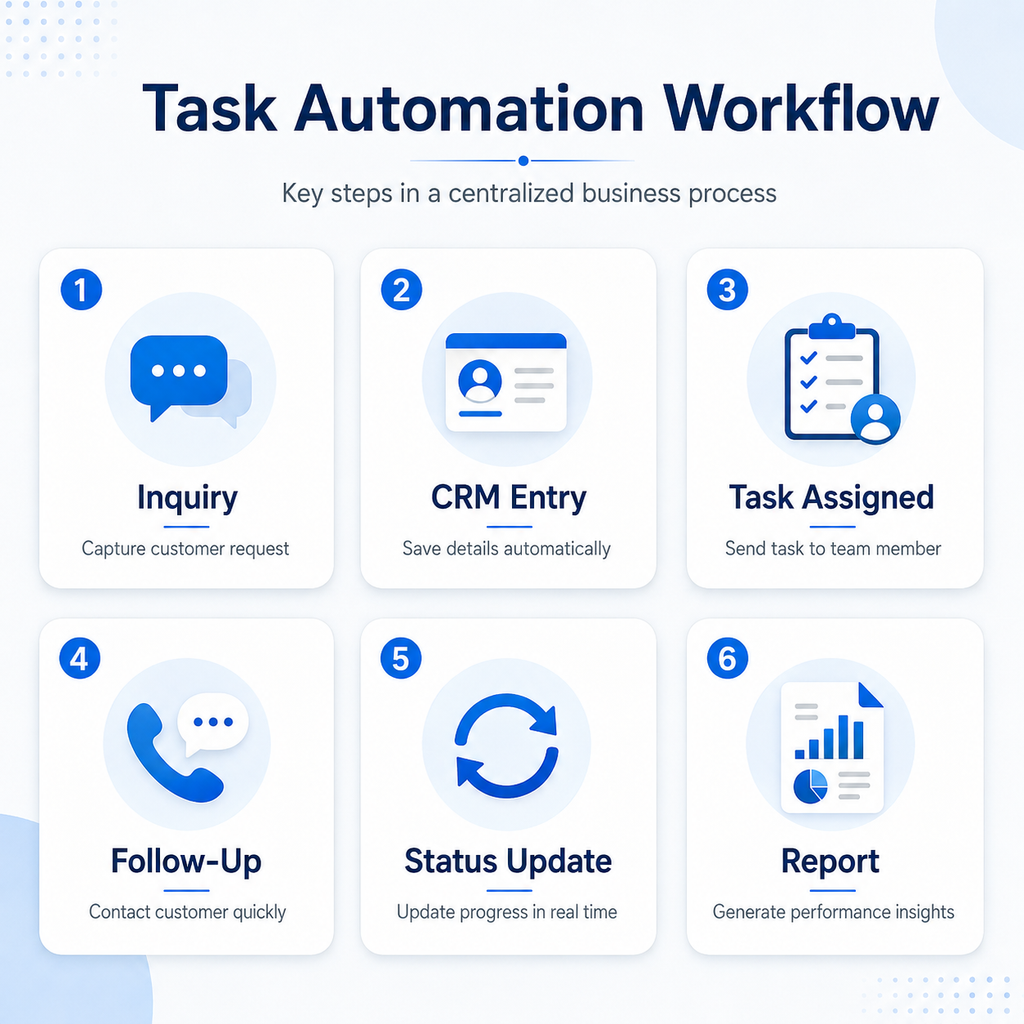
For example, a system can automatically capture leads, update customer records, send reminders, generate reports, assign tasks, and track progress.
This helps the team work faster and focus on more important activities.

Examples of Tasks That Can Be Automated
Businesses can automate many daily tasks, such as:
- Lead management
- Customer follow-up
- Sales tracking
- Inventory updates
- Report generation
- Approval workflow
- Document management
- Task assignment
- Customer support
- Payment reminders
Benefits of Reducing Manual Work
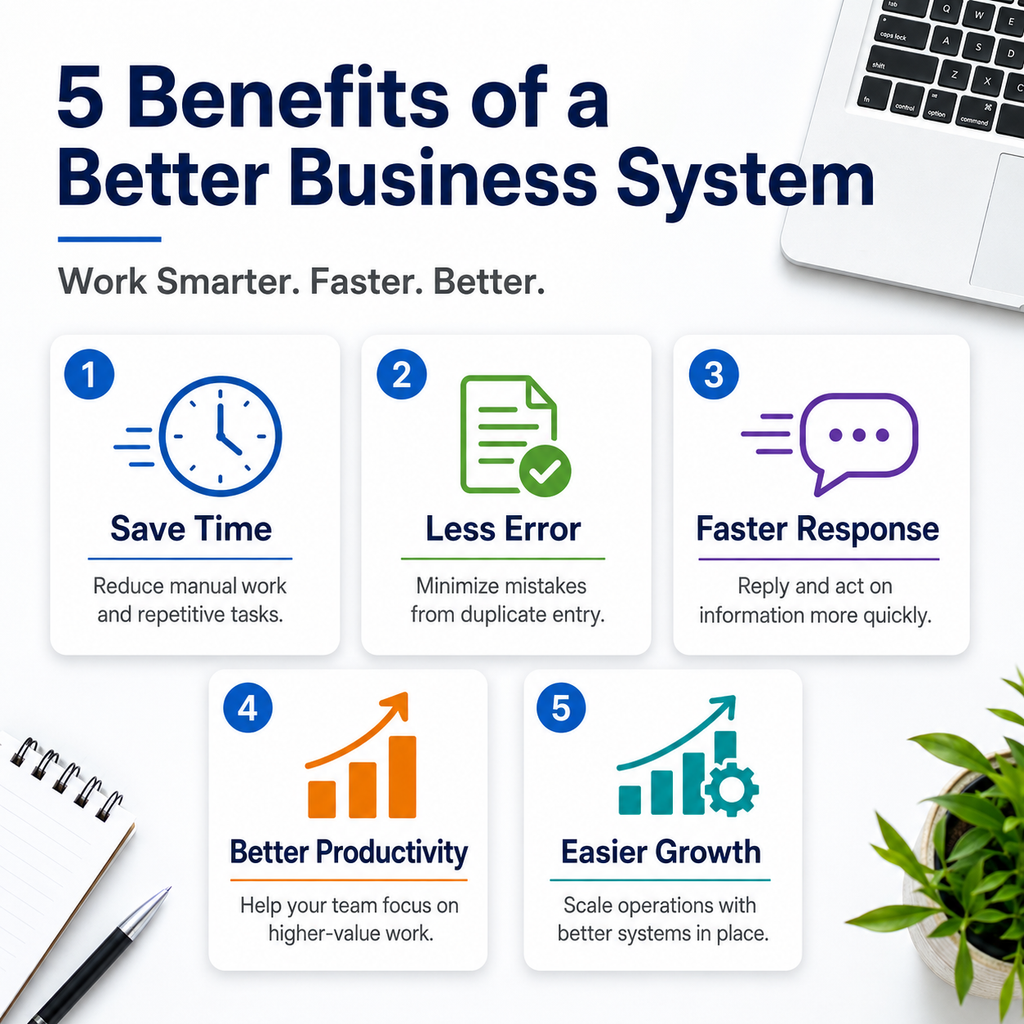
When businesses reduce manual work, they can save time, reduce mistakes, improve customer response, increase team productivity, and make faster decisions.
It also helps the company scale without depending too much on manual manpower.
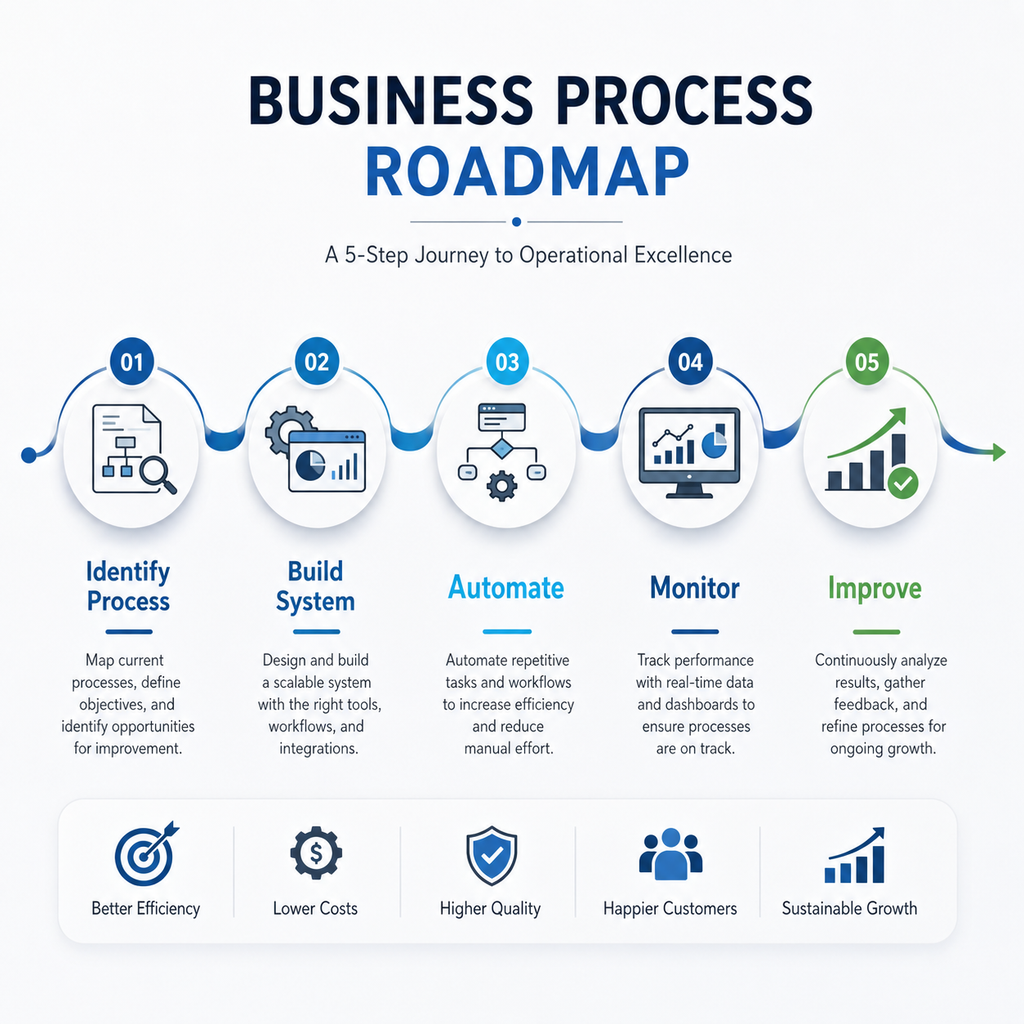
How to Start Reducing Manual Work
Businesses do not need to automate everything at once.
Start by identifying the task that takes the most time or creates the most delay. Then, build a simple system or automation process around that area.
For example, companies can start with CRM, dashboard, customer portal, approval system, or workflow automation.
Conclusion
Manual work may feel normal, but it can slowly hold back business growth.
It takes time, increases errors, slows down customer response, and makes it harder for teams to work efficiently.
By using automation, CRM, dashboards, portals, and custom systems, businesses can reduce repetitive work and operate more smoothly.
For growing companies, reducing manual work is not just about saving time. It is about building a better foundation for future growth.