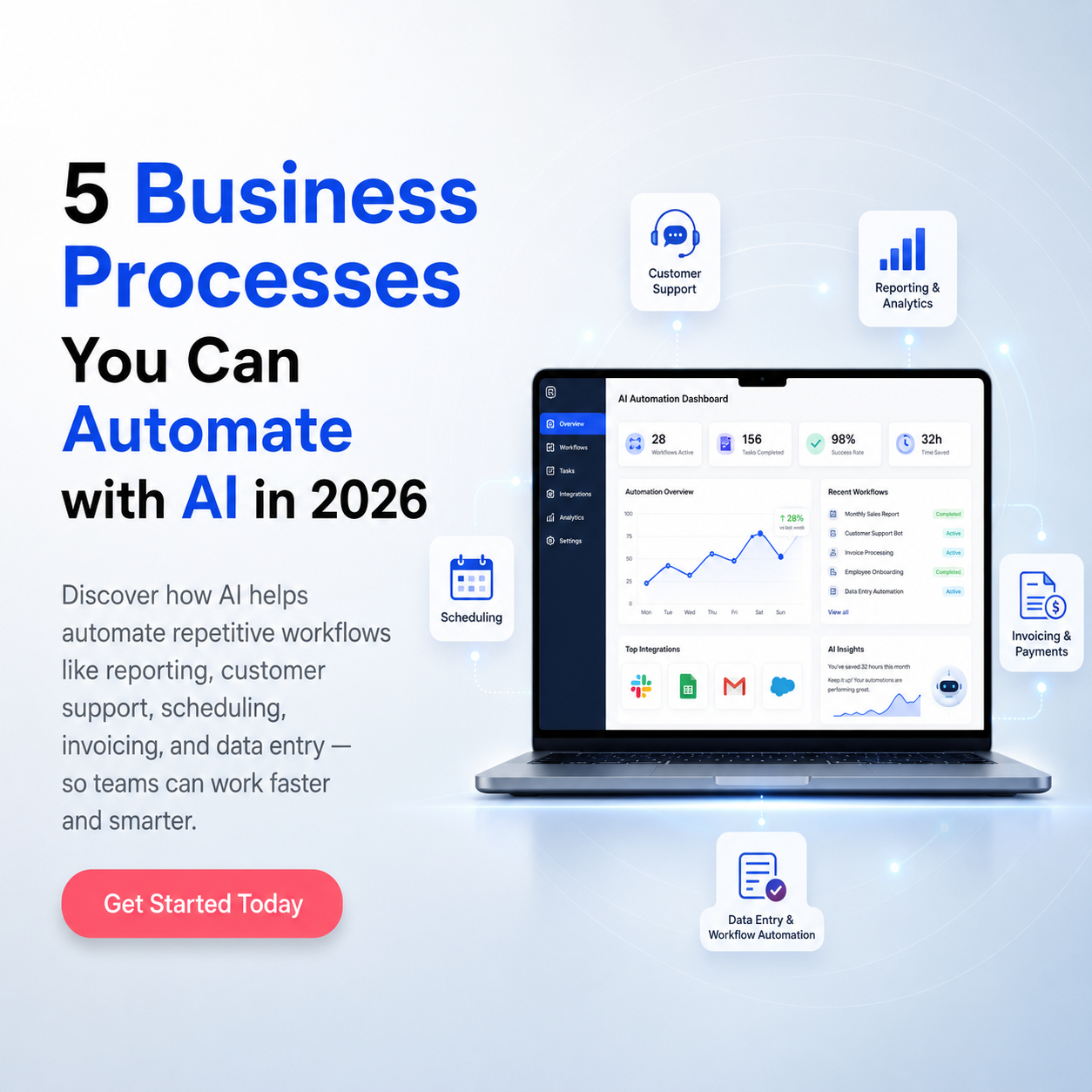
5 Business Processes You Can Automate with AI in 2026
In 2026, AI is no longer just a technology trend. It has become a practical tool that helps businesses reduce manual work, speed up daily operations, and improve decision-making.
Many companies still spend too much time on repetitive tasks such as replying to customers, preparing reports, managing leads, checking documents, and updating data manually.
With AI automation, these tasks can be done faster, more consistently, and with fewer errors. The goal is not to replace your team, but to help them work smarter and focus on higher-value tasks.
What Is AI Automation?
AI automation is the use of artificial intelligence to perform tasks that usually require manual effort, human checking, or repeated decision-making.
It can help businesses process data, answer customer questions, generate reports, detect patterns, assign tasks, and trigger follow-up actions automatically.
For example, instead of staff manually checking every customer inquiry, AI can help categorize messages, suggest replies, and route the right inquiry to the right department.

1. Customer Service and Inquiry Management
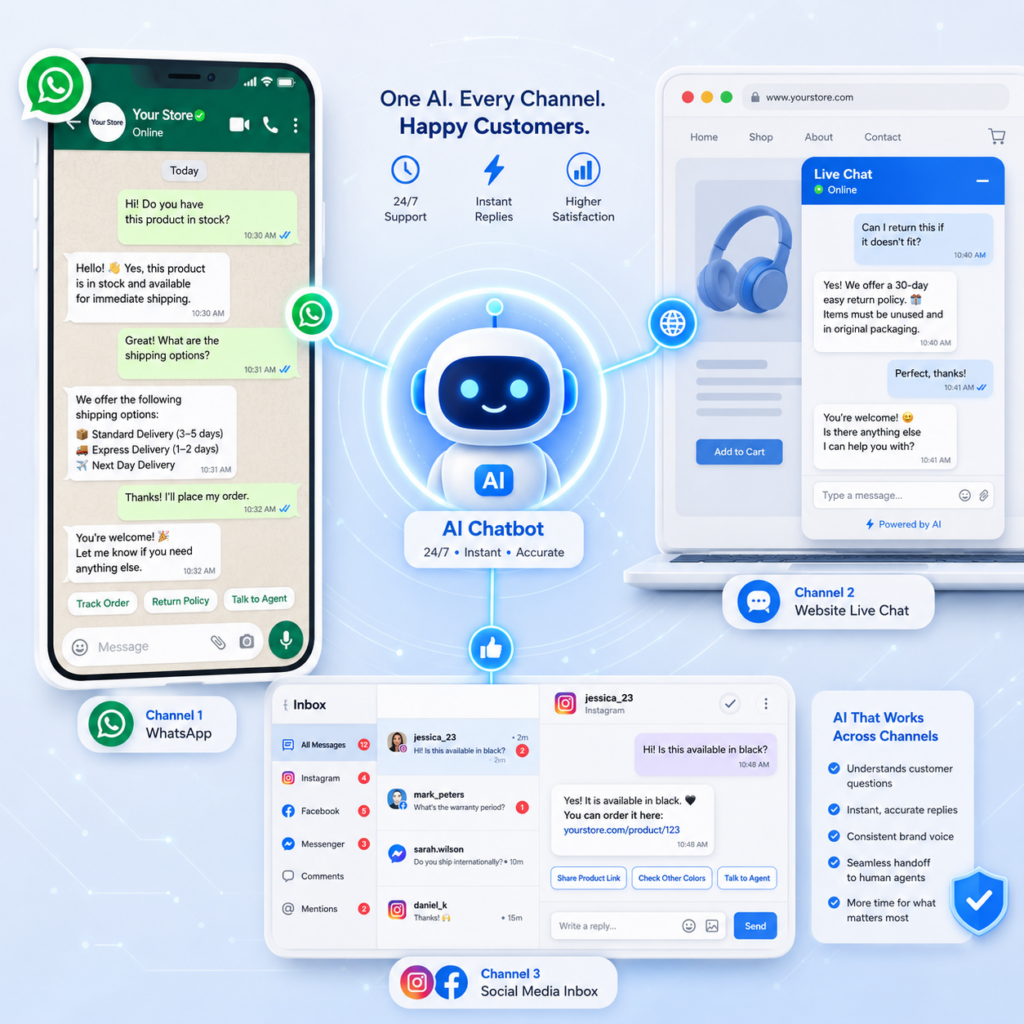
Customer service is one of the easiest areas to automate with AI.
Many businesses receive repeated questions every day, such as pricing, product details, delivery status, service information, booking availability, or troubleshooting steps.
AI chatbots can help answer common questions instantly, collect customer details, and pass serious inquiries to the sales or support team.
This helps customers get faster replies while reducing the workload of your staff.
2. Sales Lead Management
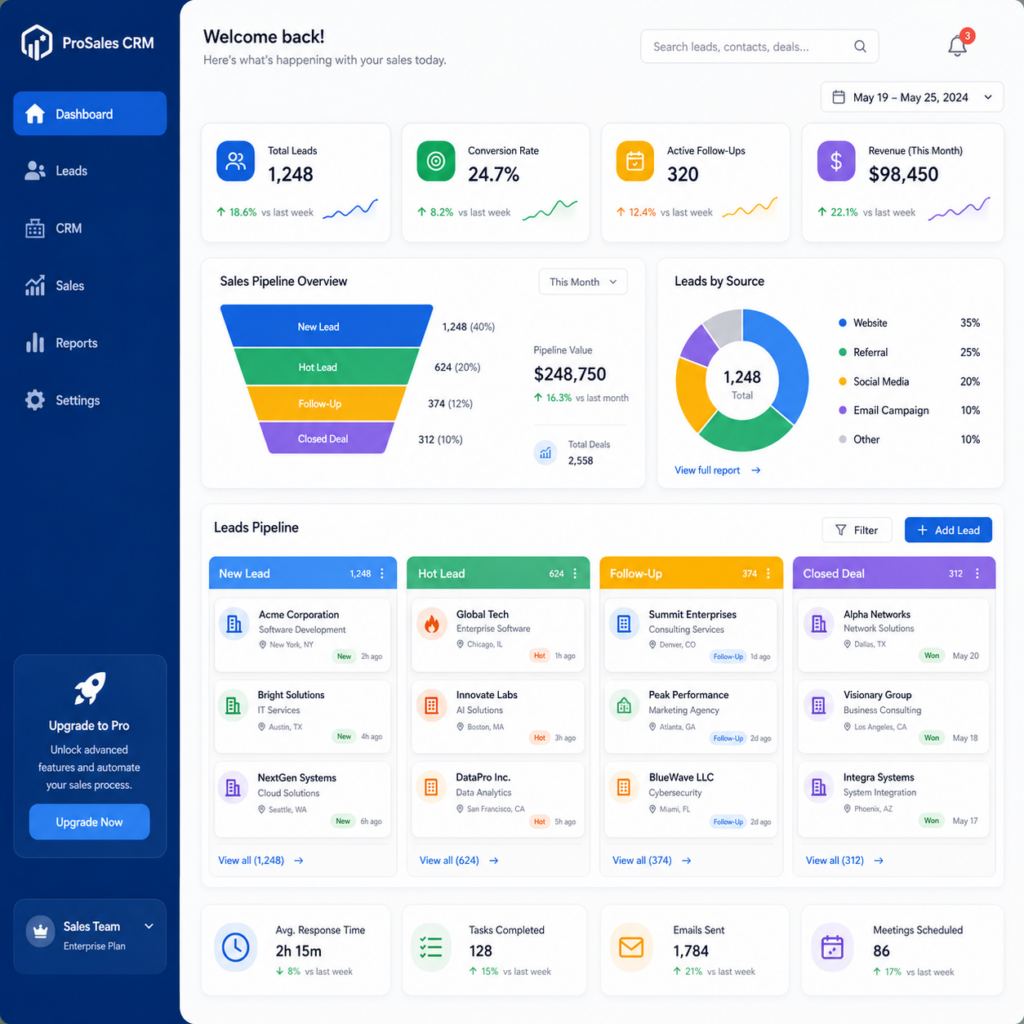
AI can also help businesses manage leads more effectively.
Instead of manually checking every new inquiry, AI automation can help capture lead information, categorize prospects, score potential customers, and remind the sales team to follow up.
For example, a lead who asks about pricing, budget, and implementation timeline can be marked as a high-priority prospect.
This allows your sales team to focus on leads that are more likely to convert.
3. Reporting and Data Analysis
Many companies still prepare reports manually using Excel or by copying data from different platforms.
AI automation can help collect data from multiple sources and turn it into useful insights.
Business owners can monitor sales performance, customer behavior, marketing results, staff productivity, and operational progress in one dashboard.
This makes decision-making faster because the information is easier to understand and available in real time.

4. Document Processing and Admin Work
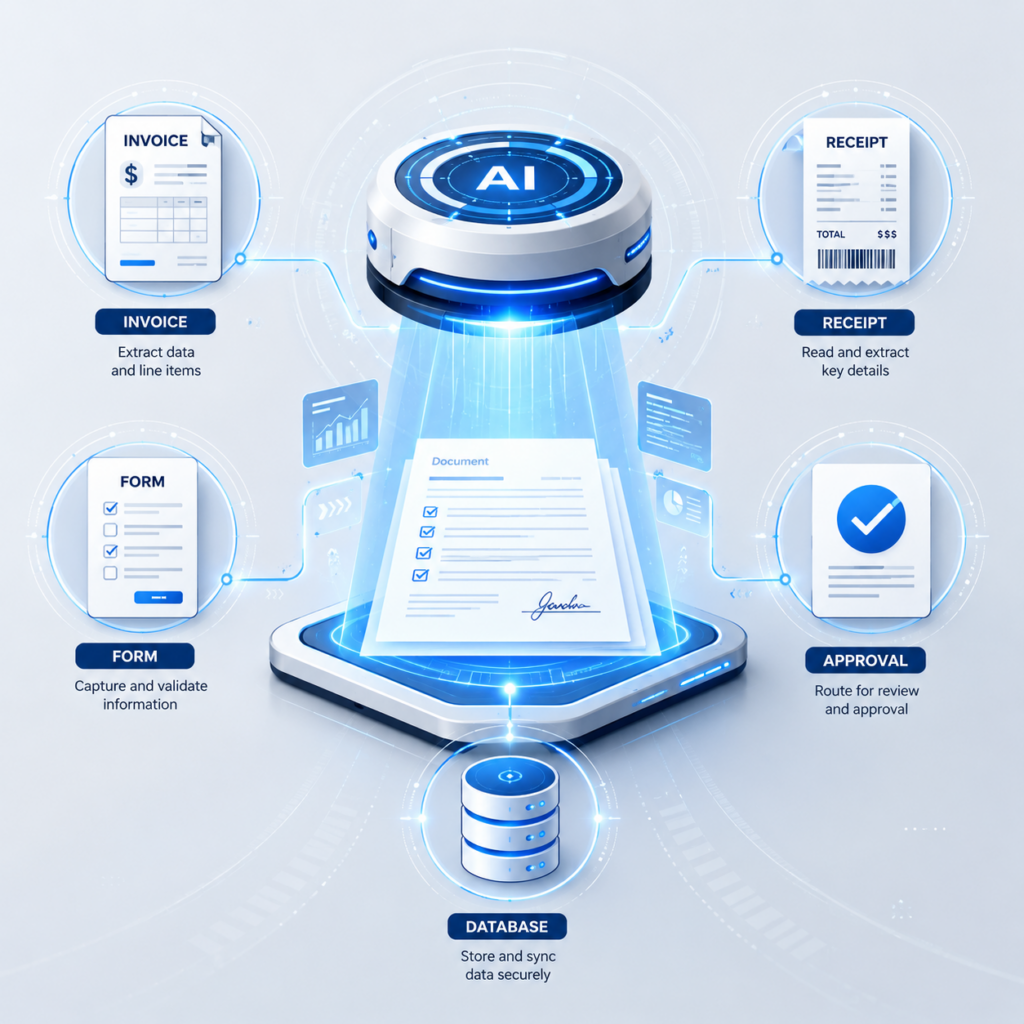
Document checking is another process that can be automated with AI.
Businesses often need to handle invoices, forms, applications, receipts, claims, agreements, or internal approval documents.
AI can help extract important information, organize files, detect missing details, and reduce the need for manual data entry.
This is useful for companies that deal with many documents every day.
5. Task Assignment and Workflow Automation
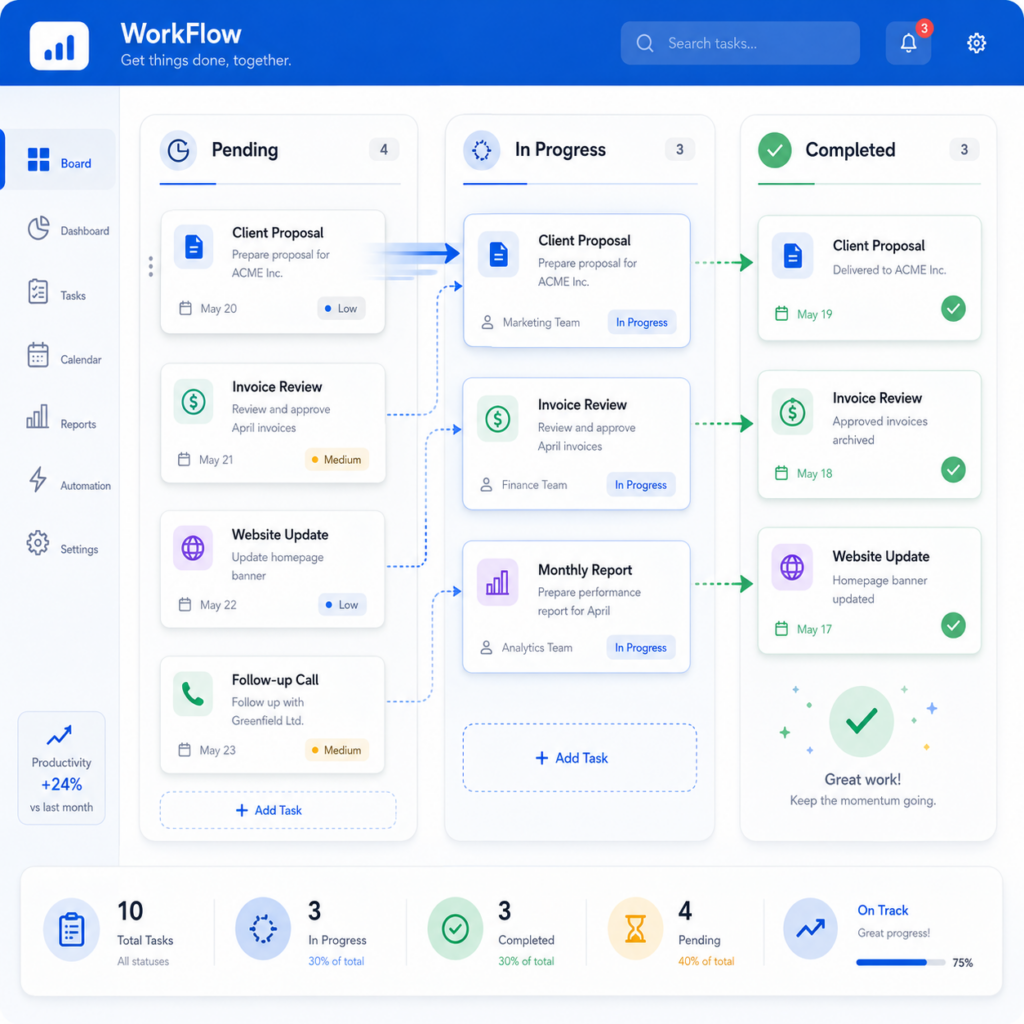
AI can help manage internal tasks and workflows more efficiently.
For example, when a customer submits a request, the system can automatically assign the task to the right department, set a deadline, send reminders, and update the task status.
This reduces confusion, prevents missed follow-ups, and keeps everyone aligned.
Workflow automation is especially useful for companies with multiple departments, branches, or approval layers.
Benefits of Automating Business Processes with AI
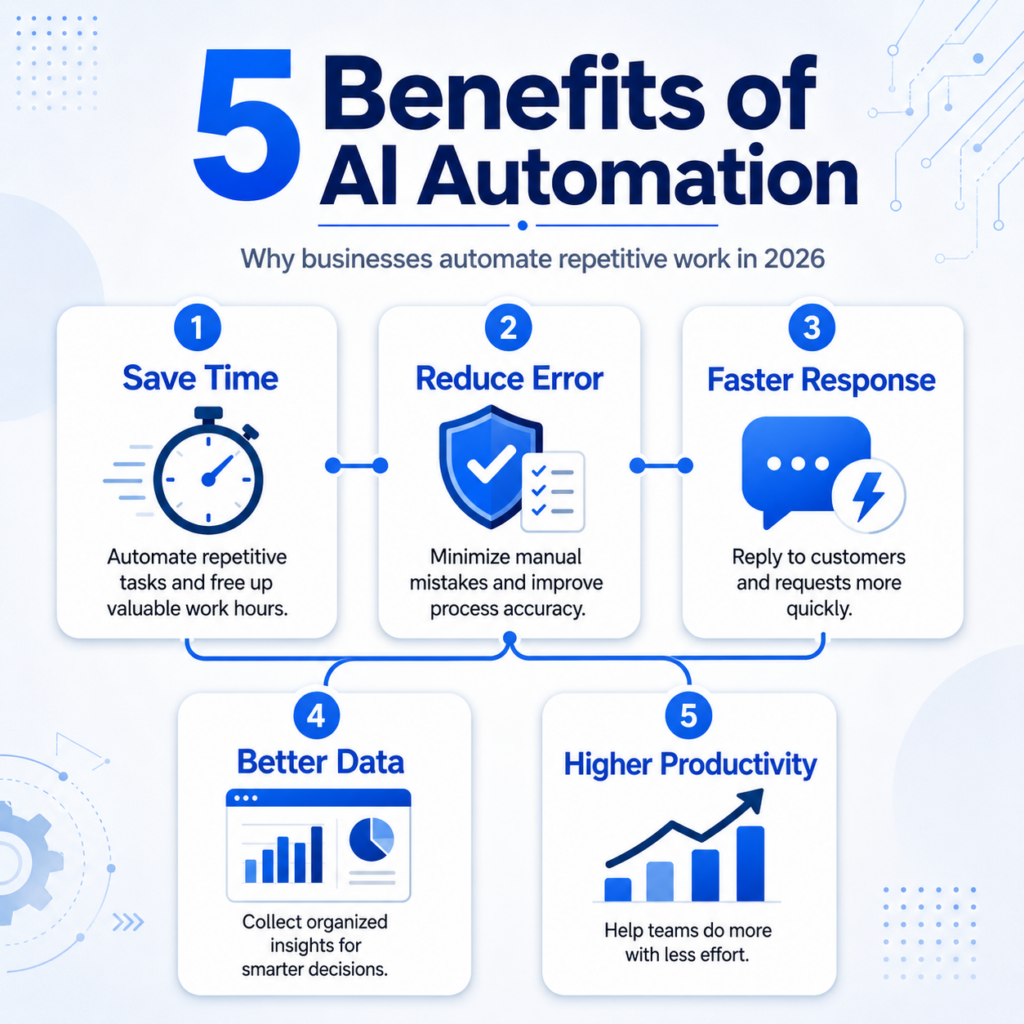
AI automation can help businesses save time, reduce repetitive work, improve response speed, minimize human error, and make operations more organized.
It also helps your team become more productive because they can focus on strategy, customer relationships, and business growth instead of routine admin work.
Is AI Automation Suitable for SMEs?
Yes. AI automation is not only for large companies.
SMEs can start small by automating one process first, such as customer inquiries, sales follow-up, reporting, or document management.
Once the first process is stable, the business can slowly expand automation into other departments.
The most important step is to identify which task takes too much time and creates the most operational delay.

Conclusion
AI automation can help businesses improve daily operations, reduce manual workload, and make faster decisions.
In 2026, companies that use AI early will have a better advantage because their teams can work faster, respond better, and manage data more effectively.
Whether your business wants to improve customer service, sales follow-up, reporting, document handling, or internal workflow, AI automation can be a smart next step.