
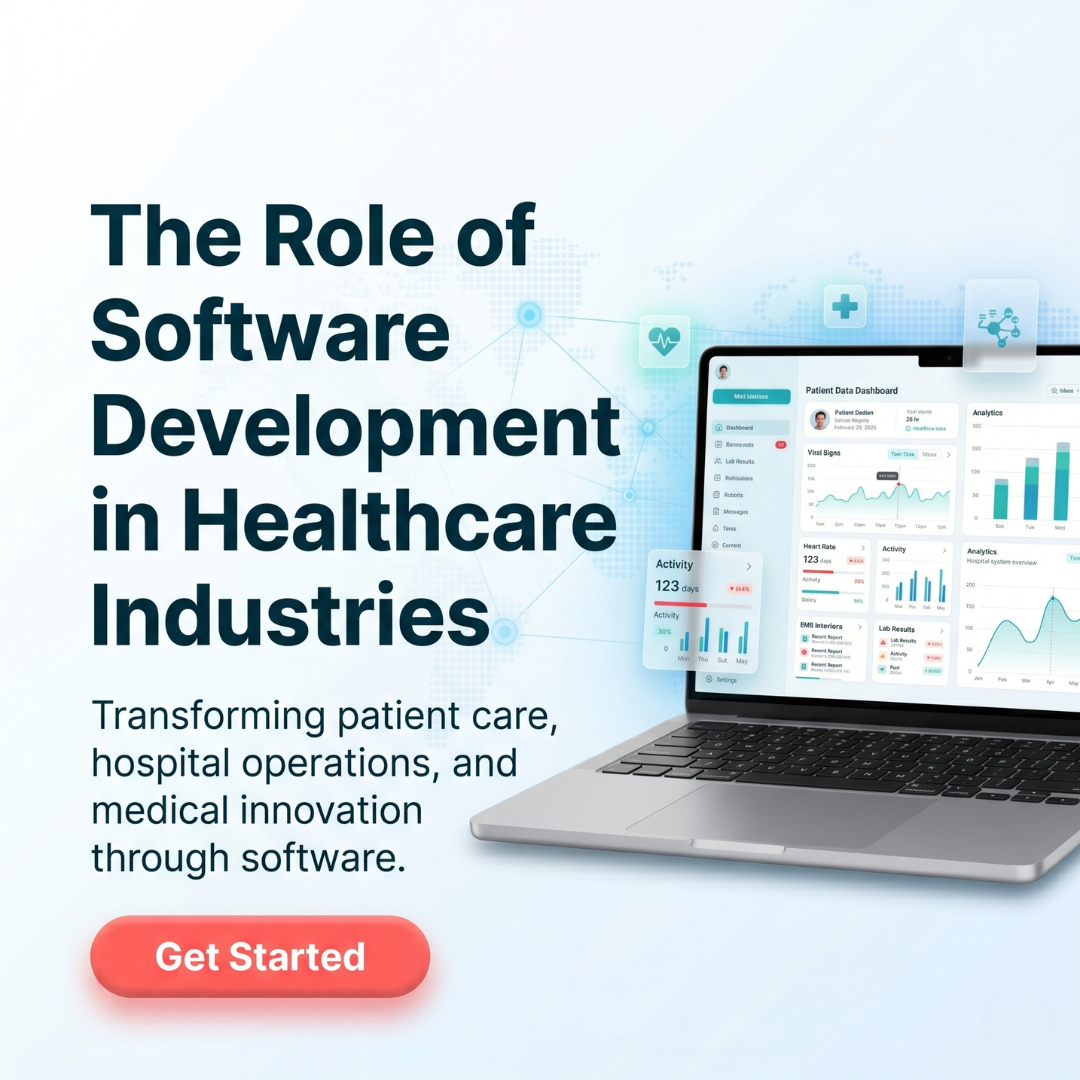
The Role of Software Development in Healthcare Industries
The healthcare business is quickly transforming, with technology playing an increasingly crucial role in driving these developments. One area where technology has had a huge impact is in the creation of healthcare software, which has transformed how patients receive treatment as well as how healthcare personnel manage and deliver services.
In this post, we will look at how software development can revolutionize healthcare and analyze some of the applications, important benefits, and issues associated with this innovation.
What is Healthcare Software Development?
Healthcare software development is the process of developing, producing, and implementing software solutions to improve the delivery of healthcare services. In addition to patient management software, medical imaging software, and telemedicine platforms, electronic medical records (EMRs) may be present.
One of the primary benefits of healthcare software development businesses is their capacity to collect and analyze data in real time, allowing healthcare providers to make more educated decisions and give more individualized care. For example, EMRs can assist clinicians in accessing a patient’s complete medical history and providing more targeted treatment. In contrast, patient management systems can assist healthcare companies in more efficiently managing resources and reducing appointment wait times.

Below is a list of key healthcare software applications:
Electronic health records (EHRs) are computerized records of a patient’s health information, such as medical history, test results, and treatment plans. They allow healthcare providers to share information more easily, which improves patient care.
Practice Management Software helps healthcare workers with administrative tasks such as billing, record keeping, patient administration, and appointment scheduling.
Telemedicine Software enables healthcare providers to give distant consultations and care using videoconferencing and other digital communication methods.
Clinical Decision Support (CDS) Systems – CDS systems enable healthcare providers make better judgments about patient care.
Medical Billing Software enables providers to manage their billing operations, such as claims submission and reimbursement tracking.
Health Information Exchange (HIE) Systems: HIE systems allow healthcare professionals to securely share patient health information, which improves care coordination and patient outcomes.
Patient Engagement Software – Tools such as patient portals, health tracking applications, and online support groups enable healthcare providers to better engage with patients.
Population Health Management Software – Population health management software enables doctors to monitor and enhance the health of huge patient populations rather than just individual patients.
Medical Imaging Software allows healthcare workers to analyze and understand medical images such as CT scans and X-rays, which helps with diagnosis and treatment planning.
Electronic Prescribing (ePrescribing) Software allows healthcare doctors to deliver prescriptions to pharmacies electronically, minimizing errors and enhancing patient safety.
These are only a few of the many healthcare software apps accessible today. As technology advances, we may expect to see more new tools and solutions for improving patient care and healthcare outcomes.

Benefits of Healthcare Software Development
There are various important advantages of healthcare software development, including:
Increased efficiency: Healthcare software may automate numerous administrative processes, allowing healthcare personnel to concentrate on patient care. This could reduce long wait times, improve the quality of service, and increase patient contentment.
Improved Accuracy: Using healthcare software can assist remove errors and inaccuracies that are common with manual processes. By automating operations like as data entry and record keeping, healthcare professionals may reduce their chances of making mistakes while also ensuring that the information they have on patients is complete and correct.
Better Communication: Healthcare software can help clinicians, patients, and organizations communicate more effectively. This can enable effective healthcare while reducing the potential of misunderstandings.
Enhanced Patient Experience: Healthcare software, such as telemedicine platforms that allow patients to communicate with healthcare practitioners remotely, can make it easier for them to get care. It can also assist in minimizing wait times, improving care quality, and offering patients more individualized treatment alternatives.
Challenges in Healthcare Software Development
While healthcare software development has the potential to revolutionize the business, it also brings certain problems. Some of the significant challenges are:
Privacy and Security Concerns: Healthcare software frequently collects and stores sensitive patient data, which can be a target for cyberattacks. Healthcare software development has significant challenges in maintaining the security and privacy of patient data.
Interoperability: With so many various healthcare software solutions available, ensuring that they all function together smoothly can be difficult. Interoperability is a major difficulty in healthcare software development, and there are continuous efforts to create standards that will assist in ensuring that diverse systems interact properly.
Regulation: Healthcare software development is governed by several laws and standards, including HIPAA (Health Insurance Portability and Accountability Act) and FDA (Food and Drug Administration) rules for medical devices. Meeting these requirements and regulations presents substantial challenges for healthcare software developers.
Summing Up
Healthcare software development has the potential to alter the healthcare industry by increasing productivity, accuracy, and care quality. Healthcare software can improve the patient experience by automating administrative processes, enabling real-time data analysis, and enhancing communication between healthcare providers and patients.
However, there are considerable hurdles to developing healthcare software, such as privacy and security concerns, as well as interoperability issues. As a result, there is a need for continuous maintenance and updates.