How AI is Transforming Company Productivity in 2026
Artificial Intelligence (AI) is no longer just a productivity tool for writing emails or automating small tasks. In 2026, AI has become a core part of how companies operate. Businesses are moving beyond simple automation toward human-AI collaboration, where machines handle speed and scale while humans focus on strategy, creativity, and decision-making.
Organizations that successfully integrate AI into their workflows are seeing significant improvements in efficiency, operational performance, and innovation.

1. From Automation to AI Agents
Early workplace AI focused mainly on automation—chatbots responding to customers or software helping with simple tasks. Today, companies are adopting AI Agents, which can perform complex workflows autonomously.
Unlike traditional bots, AI agents can:
- Analyze information
- Make decisions
- Execute tasks across multiple systems
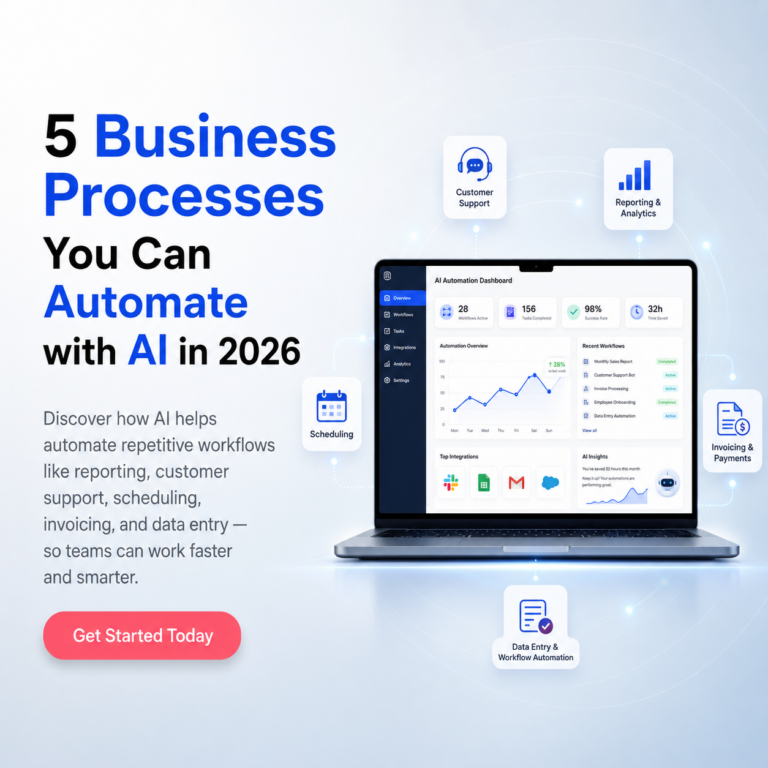
For example, instead of an employee manually transferring data between a CRM, spreadsheet, and email system, an AI agent can manage the entire workflow automatically. In departments like HR and procurement, AI agents are already assisting with candidate screening, compliance checks, and contract drafting.
This shift dramatically reduces administrative workload and allows teams to focus on higher-value activities.

2. Eliminating Hidden Productivity Loss
Many productivity losses in organizations come from small inefficiencies such as meetings, manual reporting, and operational delays. AI helps eliminate these hidden time-wasters.
For example:
Smart Meeting Assistants
AI tools can automatically transcribe meetings, summarize discussions, and generate action items. These notes can then be synced directly into project management tools, reducing time spent on follow-up documentation.
Predictive Maintenance
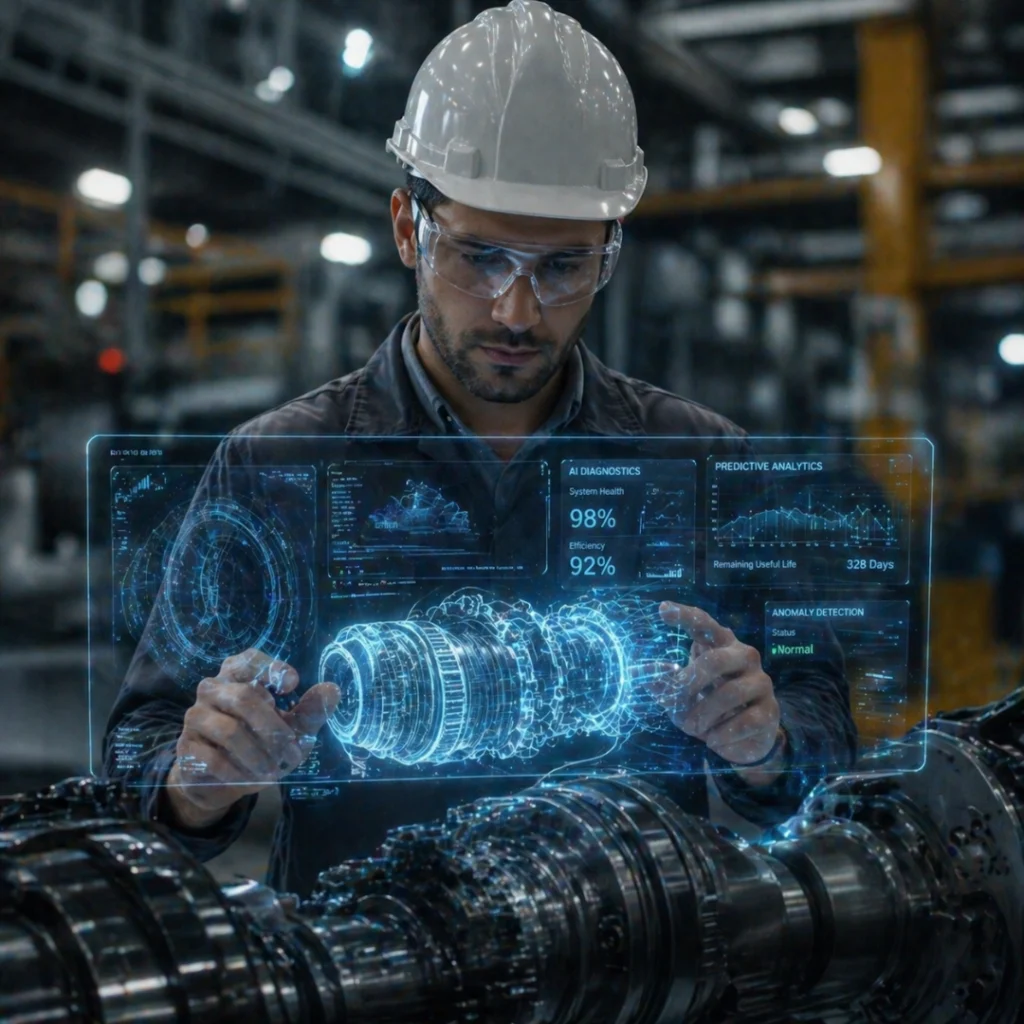
In manufacturing and logistics, AI analyzes sensor data from machines to predict failures before they occur. Companies using predictive maintenance systems have reported reductions in downtime of up to 30%.
By preventing problems before they occur, AI helps organizations maintain smoother operations.

3. Data-Driven Decision Making
Modern businesses generate enormous amounts of data every day. AI allows companies to transform this data into real-time insights that guide better decisions.
AI-powered analytics platforms can:
- Predict customer demand
- Identify operational risks
- Forecast market trends
- Analyze complex datasets within minutes
What once required days of manual research can now be completed almost instantly using AI-driven analysis tools. This enables leaders to make faster and more accurate strategic decisions.
4. Enhancing Employee Productivity
Rather than replacing workers, AI is becoming a powerful assistant that improves employee productivity.
AI tools can help employees:
- Draft reports and documents
- Summarize long information
- Generate insights from data
- Organize tasks and schedules
With AI handling repetitive or time-consuming tasks, employees can concentrate on work that requires creativity, strategic thinking, and human judgment.
5. Strengthening the Human Advantage
Ironically, as AI becomes more capable, human skills become even more valuable.
AI excels at speed, automation, and pattern recognition. Humans, however, remain stronger in areas such as:
- strategic thinking
- leadership
- negotiation
- creative problem-solving
- emotional intelligence
Many organizations are now using AI for personalized employee training, where AI systems analyze skill gaps and recommend learning paths tailored to each individual.
This helps companies develop talent faster and keep employees competitive in an AI-driven workplace.
Conclusion
AI is transforming productivity not just by automating tasks but by reshaping how work is done. Companies that integrate AI into their operations can achieve faster workflows, smarter decisions, and more efficient teams.
The future of productivity lies in human-AI collaboration—where technology handles scale and complexity while humans focus on innovation, strategy, and leadership.
Organizations that embrace this partnership will be better positioned to compete and grow in the AI-powered economy.